
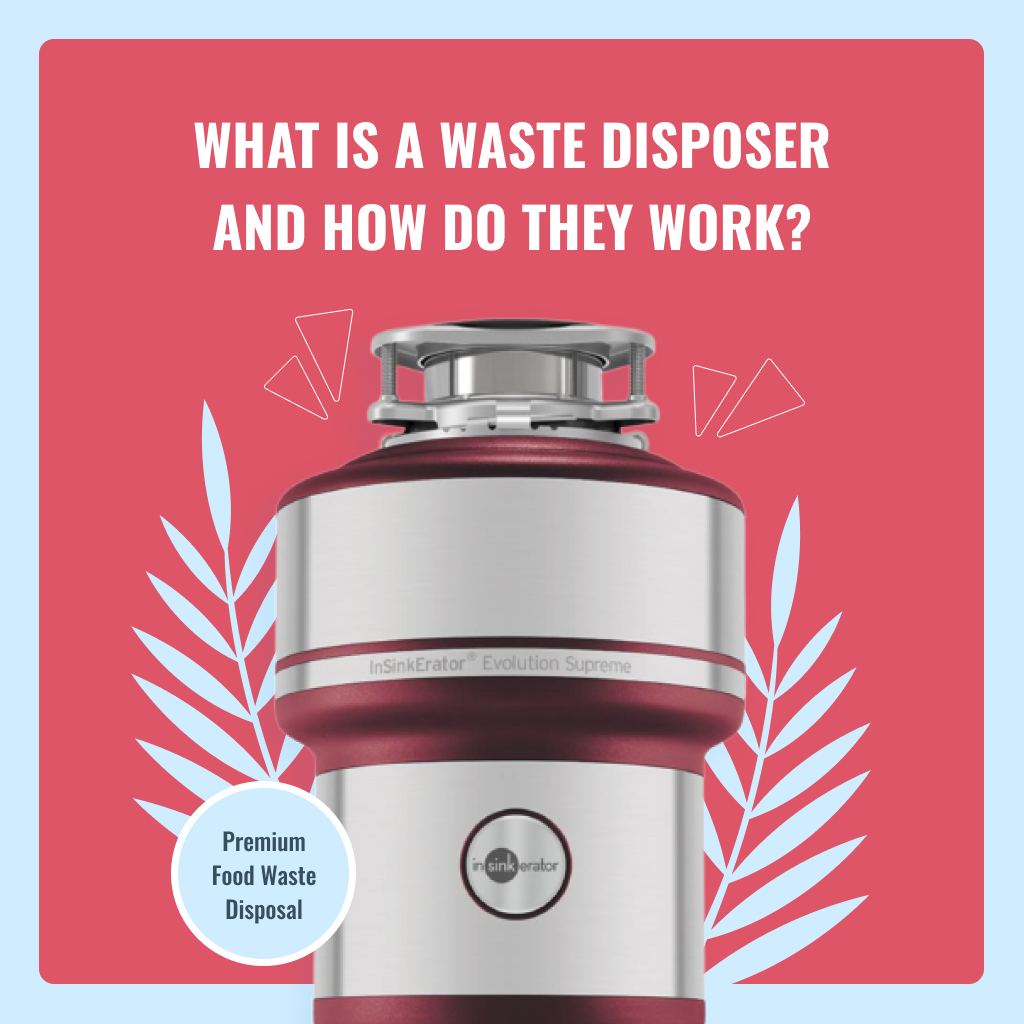
Food waste disposal units (also referred to as waste disposers or waste disposals) are very popular in America, but they are a little bit more uncommon in the UK. That does not stop them from having a loyal fanbase here too.
Here at Plumb2u, we are convinced that they would be a great addition to any home as they offer a practical and environmentally friendly solution to food waste.
In this article, we will try to answer all the questions you may have and list all the benefits that these products have.
Why use a food disposer?
The Environmental benefit:
When you throw food waste into the bin, it gets trucked to a landfill. Trucks give off carbon monoxide, which is bad for the environment.
Once in the landfill, the food waste starts to decompose and emits methane. Methane, once in the atmosphere, is known to contribute to global warming and climate change.
Composting can be a good solution to make better use of food waste. However, it is time consuming and can be messy. In addition, meat, dairy and seafood cannot be composted.
The best alternative to composting is using a food waste disposer! When using one, your food waste goes down your drains (as fine particles), into the sewer system and ends up in a wastewater treatment plant. More and more, modern water treatment plants can turn this waste into renewable energy and fertiliser. Within the plant, microorganisms are used to eat up and transform the waste sludge. This creates Methane too. The key difference, however, is that this takes place in a controlled environment (as opposed to the landfill). Methane can be captured and later used as a fuel.
Hygiene:
Black bins in the UK are collected weekly at best. In some areas, you might have to wait for up to 3 weeks.
Using a waste disposer to manage food waste and keep most of it out of your trash reduces kitchen odors and bacteria and result in a cleaner, fresher and more hygienic kitchen.
No more leaky trash bags to take out of the kitchen and through your house!
Your outside black bin can now wait for collection without generating smells or attracting pests. There will be virtually no need to clean the inside of it.
What is a Waste Disposer?
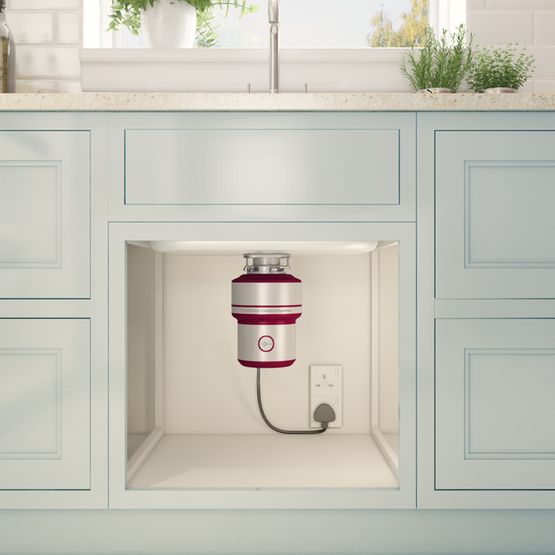
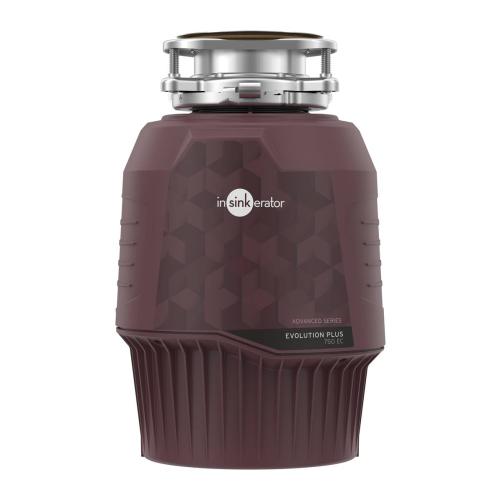
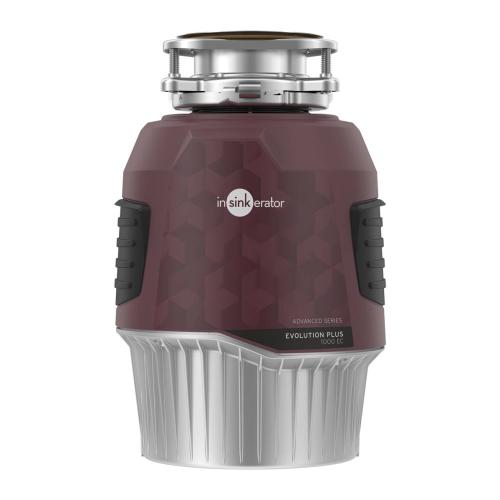
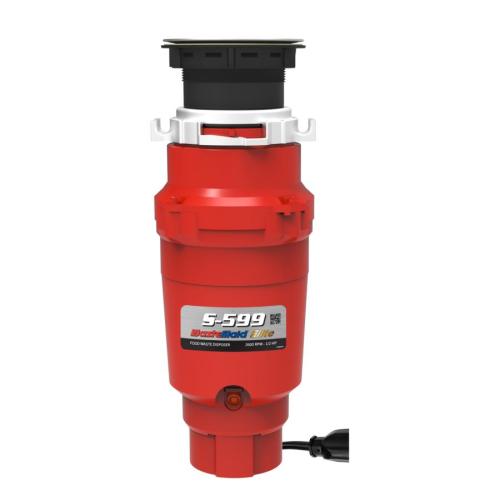
Food waste disposers are mechanical units that fit underneath your sink and allow you to dispose of any food item quickly and efficiently. They grind food waste into smaller pieces to allow it to pass through your plumbing system.
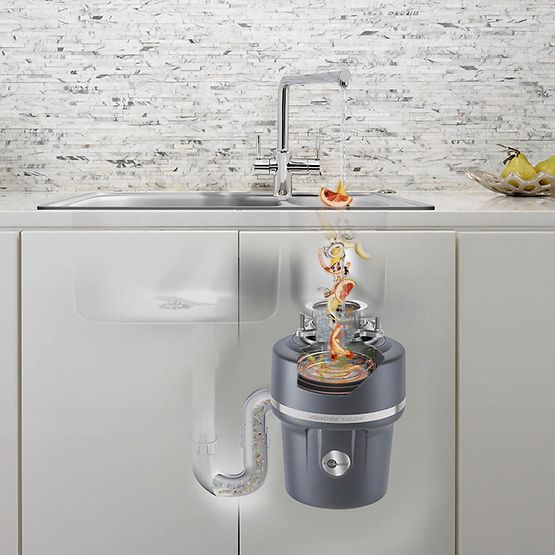
How does a food disposer work, and is it safe to use?
Unlike their older versions, modern waste disposal units have no blades or knives and are much safer. Instead, they feature a stationary grind/shredder ring and a rotary plate/turntable.
The rotary plate is fitted with impellers that break down the food and push it outwards (by centrifugal force) and against the stationary grind ring.
Thanks to their powerful electrical motors, waste disposal units are able to grind up very rapidly the food waste in fine particles that can then be easily flushed through the plumbing.
How do you install and operate a food disposal unit?
Installation:
A food waste disposal unit can be fitted to any sink with a 90mm sink waste opening, which is the standard opening now.
It can be fitted to most single or double-bowl sinks and does not interfere with their normal functioning.
They can also be retrofitted if not installed at the time of building. You will just need an electrician to connect it to the mains and fit a wall or cupboard switch.
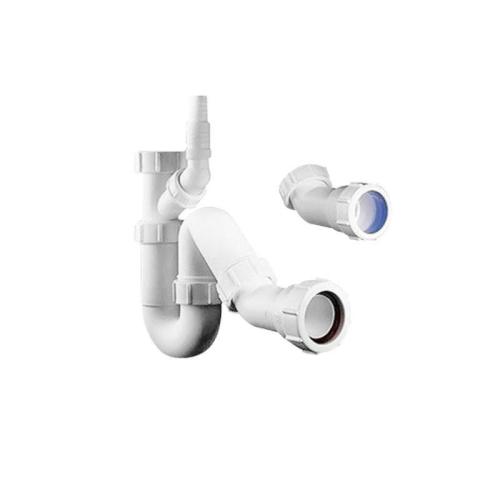
For the easiest installation, we recommend this kit:
InSinkErator 71498 Universal Plumbing Kit
Operation:
To operate your food disposer, simply open your kitchen tap and run a medium stream of water into the sink that has been equipped. Turn on the unit via the air switch or the wall switch and feed the food waste through the opening.
The time it takes for your food disposal unit to grind the food will depend on both the quantity and type of food that you are disposing of.
Changes in the noise emitted by unit will give you the best indication of when you disposer has completed its task. There is a specific sound when the motor and plates are spinning freely. This changes when you push down food waste and comes back again when the work is done.
What food can be disposed of with a food waste disposal unit?
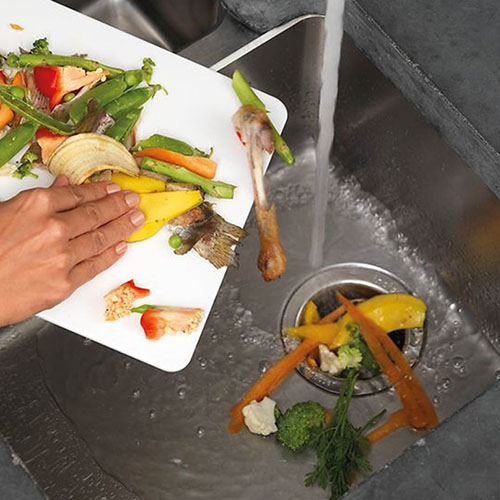
Food waste disposers are not just for fruits and vegetables.
They can deal equally well:
- chicken bones and chop bones.
- Seafood that creates smells in the bin, especially in summer, is another type of kitchen waste that your disposer will have no trouble dealing with. This includes fishbones and prawn shells.
- Meat and dairy can be disposed of easily with a disposer. This is especially recommended as they are not safe to incorporate in your compost. They can be the source of dangerous bacteria.
- tea bags (minus string/staple), coffee grinds
With top of the range products such as the InSinkErator Evolution 200 S Premium, the list of food waste that can be processed is even longer. It can deal with virtually any type of food waste. It features 3-stage grind technology and can deal efficiently with:
- stone fruit pits
- stringy fibrous food scraps such as celery, banana peel and corn cobs
- artichoke stems
- egg shells
How to choose a food waste disposer?
Grinding ability:
We have just talked about the type of food that a waste disposal unit can deal with. Different models, depending on their cost can have different grinding abilities. Grinding ability is the first criterion when it comes to choosing your kitchen waste disposer.
Noise:
If noise is less of a concern, these two models are perfect choices and deliver a strong and reliable performance at a moderate cost:
InSinkErator 77969H Model 46 AS Waste Disposal Unit with Air Switch
InSinkErator 77970H Model 56 Food Waste Disposer with Air Switch - Black
For quiet, quieter and ultra quiet operation, we recommend the following products respectively:
InSinkErator Model 66
InSinkErator Evolution 100 S Premium
InSinkErator Evolution 200 S Premium
(The quality of the sink your unit is fitted onto will also be a factor in the quietness of its operation.)
Batch feed units vs continuous feed:
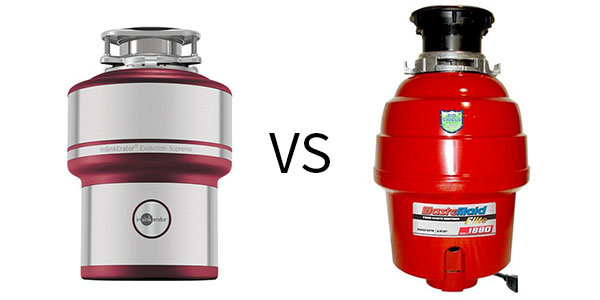
There are 2 types of food waste disposer units. You will need to decide which type is right for you.
Continuous feed:
Continuous feed models are operated by an air switch or an electrical socket (on a wall or inside a cupboard). Food can be added continually during operation.
Batch feed:
With batch feed waste disposal units, food is loaded into the disposer before switching the unit on. A cover needs to be pushed down before the grinder can be turned on. After the grinding process is finished, you need to process another batch if you have more food to process.
The fact that a cover is used makes batch feed models usually quieter than continuous feed ones. There is also less risk of any objects or utensils falling into the unit and damaging it by accident.
Batch feed still requires water to be used, but water is not running during the whole process.
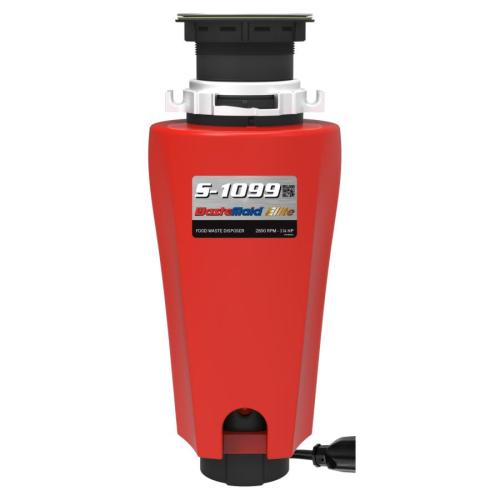
Here are two popular models of batch feed units:
Waste Maid Elite Mid Duty Batch Feed Disposer 1785BF
Waste Maid Elite Deluxe Batch Feed Disposer 1985BF
Overall, continuous-feed disposals are more popular than batch feed units. There is more choice on the market for them, they tend to be cheaper and they will take up less space under your sink. In particular circumstances, however, batch feed might be the right choice.
Air Switch or Electrical Switch:
Traditionally, electrical switches are used to switch food disposers on and off. This requires a qualified electrician to fit a switch somewhere on a wall or cabinet, in close proximity to your unit. They might be the most discreet option for your kitchen.
There are two drawbacks, however:
When retrofitting a waste disposer, finding a spot and fitting an electrical switch can be challenging.
When dealing with food waste in the kitchen, you often end up with wet hands. Having to wipe them everytime to safely switch on your unit on or off might be inconvenient for some.
For those 2 reasons, Air Switches have become a popular choice. An air switch is a non-electrical component and is perfectly safe around water. (It sends an air pulse through a thin plastic tube and acts as a mechanical switch.) They are easy to install and only require you to drill a small hole in your counter.
Conclusion
We hope that this article has convinced you to at least consider a food disposer for your kitchen.
Reducing the amount of waste that goes to the landfill can only be a good thing.
If you want to make a difference for the environment, they are a great (and easier!) alternative to composting.
Most people in the UK are still a little unfamiliar with food waste disposers, but they are making a steady progression, and there is a growing number of converts every year.
After reading this article, you should now be able to navigate the different options more easily.
Browse our range of waste disposers: Waste Disposers Range


Food waste disposal units (also referred to as waste disposers or waste disposals) are very popular in America, but they are a little bit more uncommon in the UK. That does not stop them from having a loyal fanbase here too.
Here at Plumb2u, we are convinced that they would be a great addition to any home as they offer a practical and environmentally friendly solution to food waste.
In this article, we will try to answer all the questions you may have and list all the benefits that these products have.
Why use a food disposer?
The Environmental benefit:
When you throw food waste into the bin, it gets trucked to a landfill. Trucks give off carbon monoxide, which is bad for the environment.
Once in the landfill, the food waste starts to decompose and emits methane. Methane, once in the atmosphere, is known to contribute to global warming and climate change.
Composting can be a good solution to make better use of food waste. However, it is time consuming and can be messy. In addition, meat, dairy and seafood cannot be composted.
The best alternative to composting is using a food waste disposer! When using one, your food waste goes down your drains (as fine particles), into the sewer system and ends up in a wastewater treatment plant. More and more, modern water treatment plants can turn this waste into renewable energy and fertiliser. Within the plant, microorganisms are used to eat up and transform the waste sludge. This creates Methane too. The key difference, however, is that this takes place in a controlled environment (as opposed to the landfill). Methane can be captured and later used as a fuel.
Hygiene:
Black bins in the UK are collected weekly at best. In some areas, you might have to wait for up to 3 weeks.
Using a waste disposer to manage food waste and keep most of it out of your trash reduces kitchen odors and bacteria and result in a cleaner, fresher and more hygienic kitchen.
No more leaky trash bags to take out of the kitchen and through your house!
Your outside black bin can now wait for collection without generating smells or attracting pests. There will be virtually no need to clean the inside of it.
What is a Waste Disposer?
Food waste disposers are mechanical units that fit underneath your sink and allow you to dispose of any food item quickly and efficiently. They grind food waste into smaller pieces to allow it to pass through your plumbing system.
How does a food disposer work, and is it safe to use?
Unlike their older versions, modern waste disposal units have no blades or knives and are much safer. Instead, they feature a stationary grind/shredder ring and a rotary plate/turntable.
The rotary plate is fitted with impellers that break down the food and push it outwards (by centrifugal force) and against the stationary grind ring.
Thanks to their powerful electrical motors, waste disposal units are able to grind up very rapidly the food waste in fine particles that can then be easily flushed through the plumbing.
How do you install and operate a food disposal unit?
Installation:
A food waste disposal unit can be fitted to any sink with a 90mm sink waste opening, which is the standard opening now.
It can be fitted to most single or double-bowl sinks and does not interfere with their normal functioning.
They can also be retrofitted if not installed at the time of building. You will just need an electrician to connect it to the mains and fit a wall or cupboard switch.
For the easiest installation, we recommend this kit:
InSinkErator 71498 Universal Plumbing Kit
Operation:
To operate your food disposer, simply open your kitchen tap and run a medium stream of water into the sink that has been equipped. Turn on the unit via the air switch or the wall switch and feed the food waste through the opening.
The time it takes for your food disposal unit to grind the food will depend on both the quantity and type of food that you are disposing of.
Changes in the noise emitted by unit will give you the best indication of when you disposer has completed its task. There is a specific sound when the motor and plates are spinning freely. This changes when you push down food waste and comes back again when the work is done.
What food can be disposed of with a food waste disposal unit?
Food waste disposers are not just for fruits and vegetables.
They can deal equally well:
- chicken bones and chop bones.
- Seafood that creates smells in the bin, especially in summer, is another type of kitchen waste that your disposer will have no trouble dealing with. This includes fishbones and prawn shells.
- Meat and dairy can be disposed of easily with a disposer. This is especially recommended as they are not safe to incorporate in your compost. They can be the source of dangerous bacteria.
- tea bags (minus string/staple), coffee grinds
With top of the range products such as the InSinkErator Evolution 200 S Premium, the list of food waste that can be processed is even longer. It can deal with virtually any type of food waste. It features 3-stage grind technology and can deal efficiently with:
- stone fruit pits
- stringy fibrous food scraps such as celery, banana peel and corn cobs
- artichoke stems
- egg shells
How to choose a food waste disposer?
Grinding ability:
We have just talked about the type of food that a waste disposal unit can deal with. Different models, depending on their cost can have different grinding abilities. Grinding ability is the first criterion when it comes to choosing your kitchen waste disposer.
Noise:
If noise is less of a concern, these two models are perfect choices and deliver a strong and reliable performance at a moderate cost:
InSinkErator 77969H Model 46 AS Waste Disposal Unit with Air Switch
InSinkErator 77970H Model 56 Food Waste Disposer with Air Switch - Black
For quiet, quieter and ultra quiet operation, we recommend the following products respectively:
InSinkErator Model 66
InSinkErator Evolution 100 S Premium
InSinkErator Evolution 200 S Premium
(The quality of the sink your unit is fitted onto will also be a factor in the quietness of its operation.)
Batch feed units vs continuous feed:
There are 2 types of food waste disposer units. You will need to decide which type is right for you.
Continuous feed:
Continuous feed models are operated by an air switch or an electrical socket (on a wall or inside a cupboard). Food can be added continually during operation.
Batch feed:
With batch feed waste disposal units, food is loaded into the disposer before switching the unit on. A cover needs to be pushed down before the grinder can be turned on. After the grinding process is finished, you need to process another batch if you have more food to process.
The fact that a cover is used makes batch feed models usually quieter than continuous feed ones. There is also less risk of any objects or utensils falling into the unit and damaging it by accident.
Batch feed still requires water to be used, but water is not running during the whole process.
Here are two popular models of batch feed units:
Waste Maid Elite Mid Duty Batch Feed Disposer 1785BF
Waste Maid Elite Deluxe Batch Feed Disposer 1985BF
Overall, continuous-feed disposals are more popular than batch feed units. There is more choice on the market for them, they tend to be cheaper and they will take up less space under your sink. In particular circumstances, however, batch feed might be the right choice.
Air Switch or Electrical Switch:
Traditionally, electrical switches are used to switch food disposers on and off. This requires a qualified electrician to fit a switch somewhere on a wall or cabinet, in close proximity to your unit. They might be the most discreet option for your kitchen.
There are two drawbacks, however:
When retrofitting a waste disposer, finding a spot and fitting an electrical switch can be challenging.
When dealing with food waste in the kitchen, you often end up with wet hands. Having to wipe them everytime to safely switch on your unit on or off might be inconvenient for some.
For those 2 reasons, Air Switches have become a popular choice. An air switch is a non-electrical component and is perfectly safe around water. (It sends an air pulse through a thin plastic tube and acts as a mechanical switch.) They are easy to install and only require you to drill a small hole in your counter.
Conclusion
We hope that this article has convinced you to at least consider a food disposer for your kitchen.
Reducing the amount of waste that goes to the landfill can only be a good thing.
If you want to make a difference for the environment, they are a great (and easier!) alternative to composting.
Most people in the UK are still a little unfamiliar with food waste disposers, but they are making a steady progression, and there is a growing number of converts every year.
After reading this article, you should now be able to navigate the different options more easily.
Browse our range of waste disposers: Waste Disposers Range