
Water Softener Cost in the UK (2026): Unit, Fitting, Salt and Running Costs
Water softener cost in the UK for 2026: unit-only vs fitted prices, salt and running costs. Learn what to budget before you buy with tips from Plumb2U.
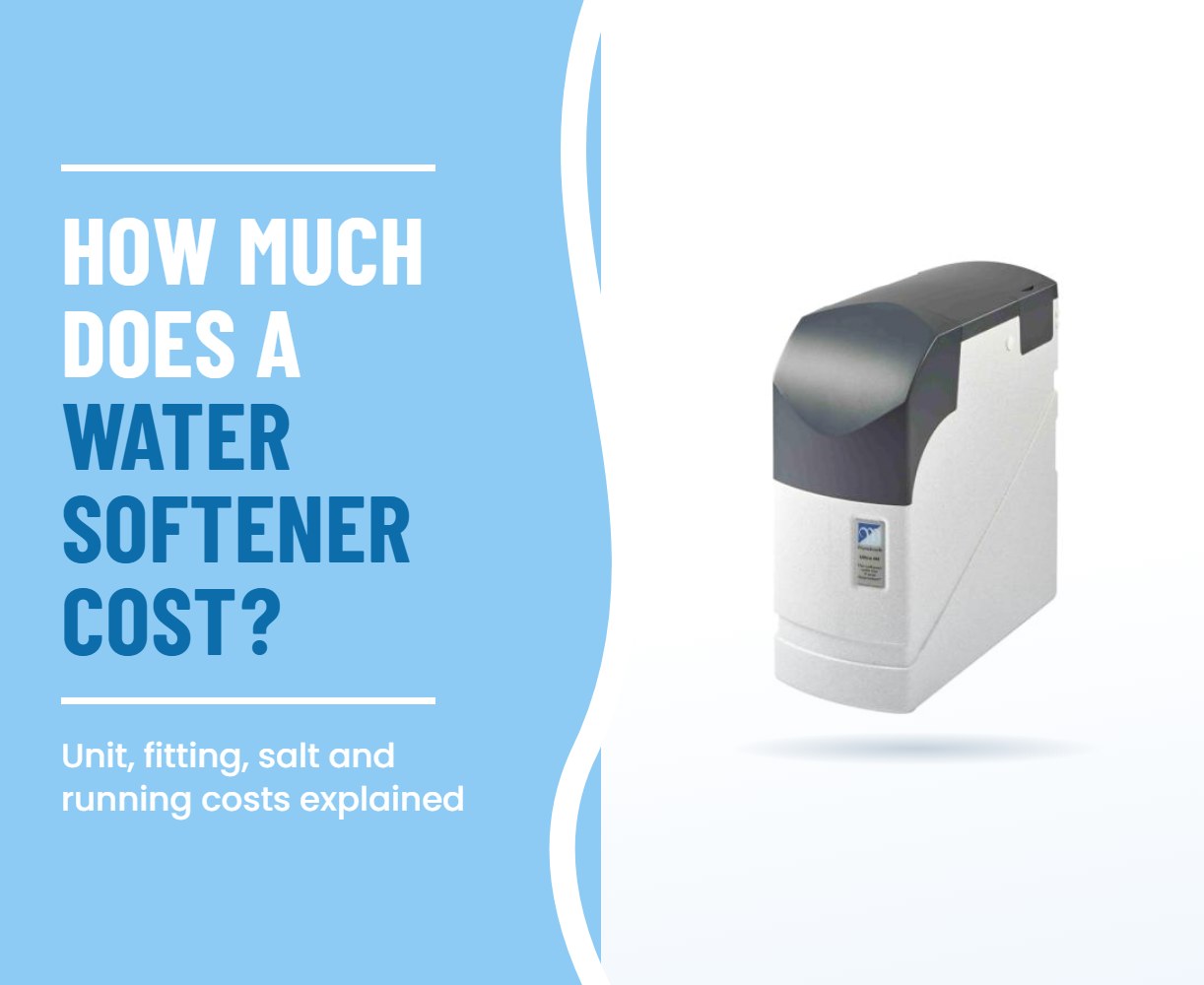
A water softener unit costs around £300 to £1,500 to buy on its own (Which?, updated 17 September 2026). Supplied and fitted, Costwise UK puts the water softener cost at £500 to £2,000, typically around £1,000 (2026). Salt tablets then run to £20 to £30 per 25 kg bag (Which?, 2026).
Those three numbers answer the headline question. The problem is that most guides mix unit-only and installed prices, so a £600 unit and a £1,600 quote can look like the same thing. This guide names the source, date and basis for every range: the price table first, then salt, the smaller running costs, twin versus single tank, whether your hard water justifies the spend, and how to get the best value when buying.
How Much Is a Water Softener? Unit Only vs Supplied and Fitted
The same unit can show up at £500 on a merchant's site and at £1,500 on an installer's quote. Neither is wrong; one includes fitting and one doesn’t.
| Type | Unit Only | Supplied and Fitted | Source and Date |
|---|---|---|---|
| Basic electric | £250 to £500 | £500 to £900 | Costwise UK, 2026 |
| Mid-range metered single cylinder | £500 to £900 | £900 to £1,600 | Costwise UK, 2026 (unit); Water Softener Quotes, April 2026 (fitted) |
| Premium non-electric twin cylinder | £900 to £1,300 | £1,400 to £2,000 | Costwise UK, 2026 |
| Twin cylinder non-electric | Not given | £1,200 to £2,000 | Hart Water, May 2026 |
| Branded units installed | Not given | £1,000 to £2,500 | TapWater, September 2026 |
| High capacity or high flow | Not given | £2,200 to £3,500+ | Hart Water, May 2026 |
For unit-only prices on the high street, Which? (17 September 2026) lists Amazon at £300 to £600, B&Q from around £400, Screwfix £500 to £1,000, Toolstation £500 to £700 and Wickes about £540 to £700.
If you’re buying the unit and booking the fitting separately, budget for labour on top. Hart Water quotes £250 to £450 for labour only (May 2026), and MyJobQuote gives a fixed-rate range of £150 to £600 (September 2026). A complex water softener installation, such as one in a high-flow home, sits at the top of every range above.
Every figure here comes from installers, lead-generation sites and publishers, and is correct at time of writing (October 2026). Treat them as market ranges rather than offers. Get a current quote from your supplier or installer before committing. For current trade prices on specific units, check the Plumb2U water softeners range and compare like for like with any professional installation quote. Please note that Plumb2U supplies the unit only. We’re not installers or plumbers and don’t offer a fitting service, so you’ll need your own plumber.
What Drives the Price: Single Cylinder, Twin Cylinder, Electric and Non-Electric
TapWater (September 2026) says the resin in a budget unit does the same softening job as the resin in a £2,000 one. So what does the extra money buy?
The mechanism is the same across salt-based softeners. Ion exchange resin swaps the calcium and magnesium in hard water for sodium. When the resin is spent, the unit regenerates it by flushing brine through from the brine tank. Price follows how that regeneration is handled and how much capacity the unit has.
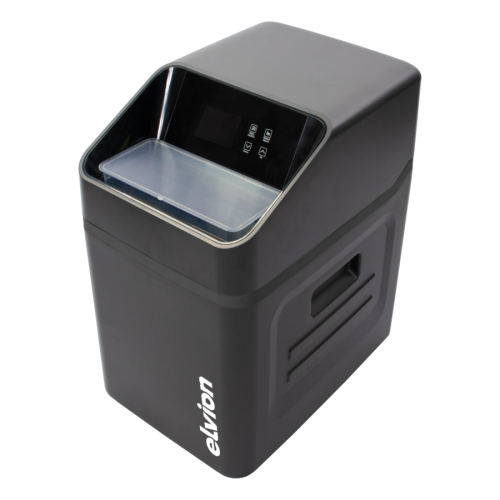
Single cylinder systems (BWT and Monarch are the usual examples) are typically metered, use an electric controller and take tablet salt (some BWT models, such as the WS455, also take block salt). With one resin tank, there’s a short pause in softened water while it regenerates, usually timed for overnight. Metered units regenerate on actual water use rather than a fixed timer. The Monarch HE range, for example, monitors water use and regenerates only when needed.
Twin cylinder non-electric units (such as the Calmag Calsoft twin tank and the battery-operated Monarch Ultra HE) run one tank while the other regenerates, so softened water never stops, and they need no plug. TapWater says this continuous supply is the main thing premium twin tank brands charge for.
Sizing moves the price too. Capacity has to match your hardness, household size and flow rate. Pure Choice says one popular compact twin tank unit suits average homes but not high-flow systems such as unvented cylinders, and a Which? Trusted Trader (Friendly Water) advises speaking to a specialist before you buy. If you need a higher flow rate, BWT’s Hi Flo models such as the WS455 are listed at up to 50 litres per minute.
There is no single best type. Our guide to the benefits of a water softener and which type to choose covers the trade-offs, and you can compare non-electric water softeners with electric water softeners side by side.
Water Softener Salt Cost: 2026 Prices and a Worked Example
The annual salt figure many guides repeat, £60 to £91 a year, comes from a Water Softener Quotes example priced in 2025. At 2026 prices, it now looks low.
Current salt prices from named sources:
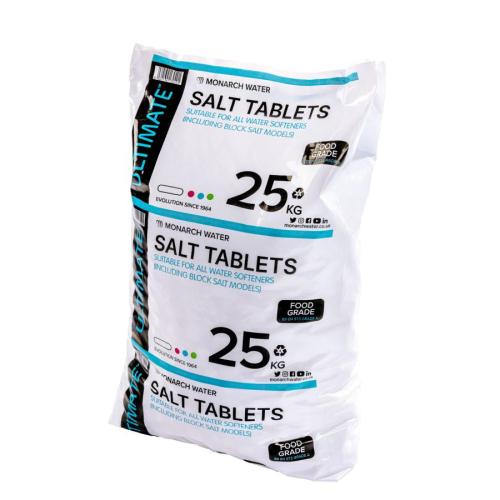
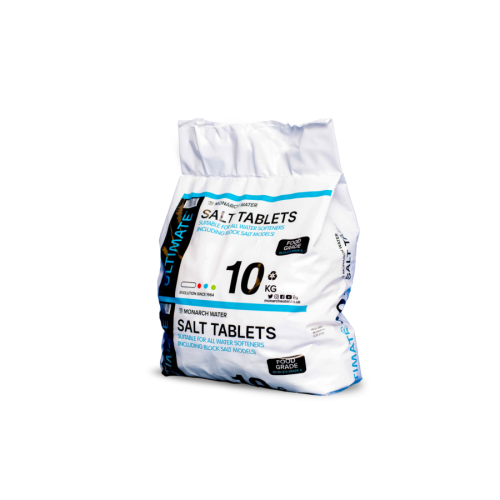
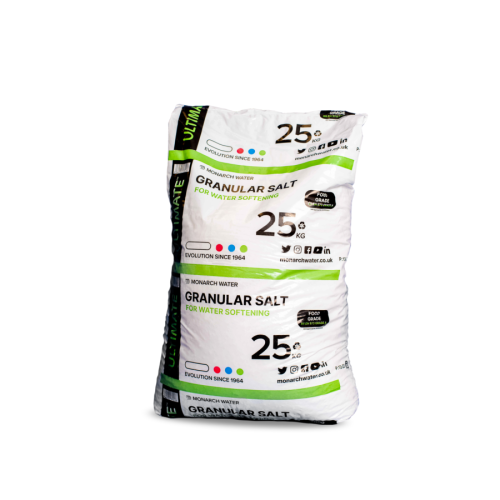
- Tablet salt: £20 to £30 per 25 kg bag (Which?, 17 September 2026).
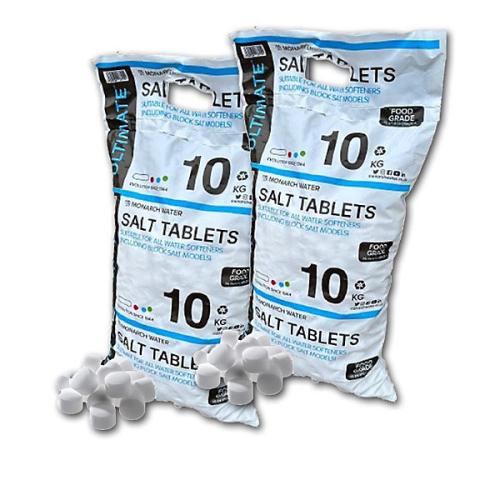
- Plumb2U’s own prices: tablet salt was £9.50 (Monarch) or £11.95 (BWT) per 10 kg bag and £23.45 for a 25 kg Monarch bag, including VAT, when read on 24 November 2026. That puts the 25 kg bag inside the Which? range.
- Block salt: £6 to £8 per pack of two blocks (Hart Water, May 2026).
Worked example (Plumb2U’s own calculation from the cited prices): Water Softener Quotes assumes a family of four in 300 ppm water uses 300 g of salt a day, or 109.5 kg a year. Re-pricing that same 109.5 kg at the Which? 2026 tablet band of £20 to £30 per 25 kg gives £87.60 to £131.40 a year in salt. At Plumb2U’s £23.45 for a 25 kg bag, the same 109.5 kg comes to about £102.71. The consumption figure is one article’s assumption, so treat the result as an illustration for a typical family, not a quote for your home.
Real salt usage varies widely. Water hardness, household size, how efficiently the unit regenerates and whether it takes tablets or blocks all affect how quickly you get through a bag, so two similar households can spend very different amounts.
One tip on salt costs: don’t buy the cheapest bag. Michael Horsell of Pure Choice, quoted by Which?, says cheap salt is “often impure and leads to a very dirty salt cabinet”. For softeners that take block salt, Plumb2U carries BWT block salt in 8 kg packs. BWT and Monarch blocks are the same size.
Water, Electricity and Servicing: The Smaller Running Costs
Salt is most of the bill. The rest is small, but worth adding up before you commit.
Water for regeneration. The Water Softener Quotes example uses 18.25 m³ a year, about £38 at its assumed rate of £2.10 per m³ (2025). That line is rising: Ofwat said on 29 January 2026 that average bills in England and Wales rose by £33, or 5.4%, for 2026-27.
Electricity. The same example assumes around 20 kWh a year. At the current Ofgem cap of 26.32p per kWh (1 October to 31 December 2026), that’s about £5.26 a year (our calculation). Non-electric units use none.
Servicing. This is where published figures disagree most:
| Source | Servicing cost |
|---|---|
| MyJobQuote, September 2026 | £50 to £100 a year |
| Hart Water, May 2026 | £80 to £150 a visit, every two to three years |
| TapWater, September 2026 | Many units need no annual contract |
| Drinking Water Inspectorate, updated February 2026 | Consider a regular service agreement |
Pure Choice puts total annual running costs at £30 to £190 depending on system design, though that sits below our salt example alone, so treat the lower end with caution. Before you buy, ask the supplier for the service interval and its cost in writing.
Twin Tank vs Single Tank Running Costs: Check the Data Sheet
Is a twin tank unit cheaper to run? It depends who you ask, and each side sells the type it favours. One twin tank manufacturer (page revised 29 September 2025) says its twin-tank design is “more salt and water efficient”. Shires Water argued in 2020 that the best single tank softeners are more efficient and cheaper to run.
Here is what a spread of electric and non-electric units costs at Plumb2U, unit only:
| Model | Type | Plumb2U price (inc. VAT) |
|---|---|---|
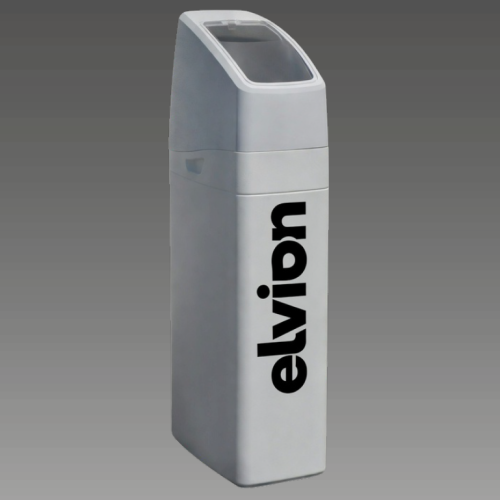
| Plumb2u Mini Electric Metered 12.5L | Electric, metered | £374.00 |
| BWT WS355 14L | Electric | £585.00 |
| Monarch Midi HE | Electric | £671.60 |
| Sentinel Sumo (15mm) | Non-electric | £699.00 |
| Monarch Ultra HE Twin Tank | Twin tank, battery operated | £929.00 |
| Calmag Calsoft Twin Tank | Twin tank, non-electric | £1,075.00 |
Source: plumb2u.com, prices read on 24 November 2026. Unit only, fitting not included.
Rather than relying on either claim, compare models on two figures from each data sheet: salt and water used per regeneration, and how many regenerations a year the unit will run at your hardness and household size. Annual salt is salt per regeneration multiplied by regenerations a year. Ask every supplier for both numbers. For upfront prices, see the price table above.
Is It Worth It? Check Your Hard Water Band First
A softener earns its keep in hard water. In soft water it’s mostly cost. The Drinking Water Inspectorate (DWI, updated February 2026) bands hardness in mg/l as calcium carbonate:
| Band | mg/l |
|---|---|
| Soft | Up to 100 |
| Slightly hard | 100 to 150 |
| Moderately hard | 150 to 200 |
| Hard | 200 to 300 |
| Very hard | Over 300 |
Your water company’s postcode checker gives your figure. The DWI calls softening “a matter of personal choice”, noting that in hard water areas a softener improves the efficiency and life of domestic appliances. TapWater’s own rule of thumb is that above about 250 mg/l a softener tends to pay back within several years, and below about 150 mg/l the sums rarely work. We found no independent payback calculation.
The DWI also points out that softening just the supply to your hot water cylinder or boiler costs less than softening the whole house, so it’s worth asking your installer whether that suits your property.
Plan for drinking water. The DWI advises keeping an unsoftened supply to the kitchen tap for drinking and cooking, and not using artificially softened water for baby feeds. Which? notes the DWI sodium limit of 200 mg/l. That unsoftened tap affects how the unit is plumbed in, so make sure it is in the installer’s quote.
Buying Routes: Merchant Plus Installer, Specialist Dealer, Rental or Salt Free
How you buy changes the total as much as the brand does.
Unit from a merchant, fitted by your own installer. TapWater calls buying the unit and using your own plumber “legitimate, and cheaper”, though you lose the brand’s fitting warranty and service line. The DWI says to use a qualified plumber and to check with your water company that the device meets the Water Supply (Water Fittings) Regulations 1999. Start with the unit price from a merchant such as the Plumb2U water softeners range, then add the labour figures above.
Specialist dealer. Get two or three like-for-like quotes. TapWater notes that premium-brand dealer pricing varies by region.
Rental. MyJobQuote (September 2026) gives £20 to £30 a month, with installation around £350 or sometimes included. It claims buying typically pays for itself within three years, which is its own estimate.
Salt free systems. Magnetic or electronic descalers cost £50 to £300 (MyJobQuote), but they do not soften water. The DWI suggests buying one only on a sale or return basis and asking for performance data in a home setting. If scale reduction is all you need, see the limescale prevention range.
Landlords. Agree in writing who supplies the salt and pays for servicing before the tenancy starts. It’s a common source of deposit disputes.
Getting the Best Value From a Water Softener
A water softener makes most sense in hard or very hard water, and the unit price is only the start. Check your water band first, compare unit-only and fitted prices like for like, and ask every supplier for salt use per regeneration and the service interval in writing. Those figures decide what you’ll actually spend over the life of the unit.
Plumb2U stocks electric and non-electric water softeners at trade prices, along with block salt and limescale prevention products. Order before 3pm for same-day despatch on stocked models.
Frequently Asked Questions
How much does a non-electric water softener cost?
Supplied and fitted, Costwise UK (2026) gives £900 to £1,400 for standard or compact non-electric units and £1,400 to £2,000 for premium twin tank models. Hart Water (May 2026) puts twin cylinder non-electric units at £1,200 to £2,000 fitted. Unit-only premium twin tank units are £900 to £1,300 (Costwise UK). Compare current prices in the non-electric water softeners range. At Plumb2U, non-electric softeners ran from £669 to £1,075 unit only, including VAT, on 24 November 2026. We supply the unit only: we’re not installers or plumbers and don’t offer a fitting service.
How much does a water softener cost to run a year?
Salt is most of the bill. Our worked example for a family of four in 300 ppm water comes to £87.60 to £131.40 a year in salt at 2026 prices. Add roughly £38 for regeneration water, about £5 for electricity on electric units, and any servicing. Pure Choice puts total running costs at £30 to £190 depending on the model.
How often do I need to buy salt?
Pure Choice, quoted by Which? (17 September 2026), suggests topping up every two to four weeks, depending on the model, your water hardness and how much water the household uses.
How long does a water softener last?
We found no independent figure. Hart Water, an installer, says resin on quality units lasts 12 to 20 years (May 2026). Michael Horsell of Pure Choice, quoted by Which?, warns that cheap units are often replaced “within a handful of years”.
Can I drink softened water?
The DWI advises keeping an unsoftened kitchen tap for drinking and cooking, and not using softened water for baby feeds, because ion exchange adds sodium. Which? notes the DWI sodium limit of 200 mg/l.
How do I know which water softener is right for my home?
It depends on your water hardness, household size, flow rate and whether you want a twin or single tank unit. Our guide to the benefits of a water softener and which type to choose is a good starting point. If you’re still unsure, get in touch with the Plumb2U team or contact the manufacturer before ordering.


Water Softener Cost in the UK (2026): Unit, Fitting, Salt and Running Costs
Water softener cost in the UK for 2026: unit-only vs fitted prices, salt and running costs. Learn what to budget before you buy with tips from Plumb2U.